Dark Net: The Network Layer
A dark net is an overlay network that requires specific software to access. It operates on top of the regular internet but uses encrypted routing to hide user identity and location. The Tor network is the most widely used dark net, routing traffic through multiple volunteer-operated nodes. I2P and Freenet are other examples. Dark nets are designed as infrastructure—they're the pipes, not the content flowing through them. The technical purpose is to enable anonymous communication and resist censorship. Anyone can run a node and contribute to the network's operation. Dark nets don't inherently contain illegal content; they're neutral tools for privacy.
Dark Web: The Content Layer
The dark web is the collection of websites, services, and marketplaces accessible through dark nets like Tor. These sites use .onion domains and are indexed by dark web search engines. The dark web includes legitimate content—privacy-focused forums, whistleblower platforms, news sites in censored regions, and security research communities. It also hosts illegal marketplaces and stolen data repositories. The distinction is important: the dark web is what you access, while the dark net is how you access it. You can use Tor (a dark net) to browse the regular web, or use it to reach dark web sites. The dark web itself is neither legal nor illegal; legality depends on the specific content and your jurisdiction.
Dark Web vs Deep Web: A Common Confusion
The deep web is any part of the internet not indexed by standard search engines. This includes password-protected email accounts, medical records, academic databases, and subscription services. The deep web is massive and mostly mundane—it's not hidden or anonymous by design. The dark web is a small subset of the deep web that has been intentionally hidden and requires specific software to access. Your Gmail inbox is part of the deep web but not the dark web. A Tor-hosted forum is part of both. Understanding this hierarchy prevents conflating everyday internet privacy with anonymity networks. Most internet users interact with the deep web daily without realizing it.
Dark Web vs Surface Web vs Regular Web
The surface web (or clear web) is the indexed, publicly searchable portion of the internet—Google results, news sites, social media. The regular web includes both surface web and deep web. The dark web sits outside this conventional structure entirely. Surface web content is discoverable and traceable. Dark web content is deliberately obscured. When comparing these layers, remember they serve different purposes. Surface web is optimized for discovery and speed. Deep web prioritizes access control. Dark web prioritizes anonymity and resistance to surveillance. A single organization might have all three: a public website (surface), a customer portal (deep web), and a Tor mirror for users in restrictive regions (dark web).
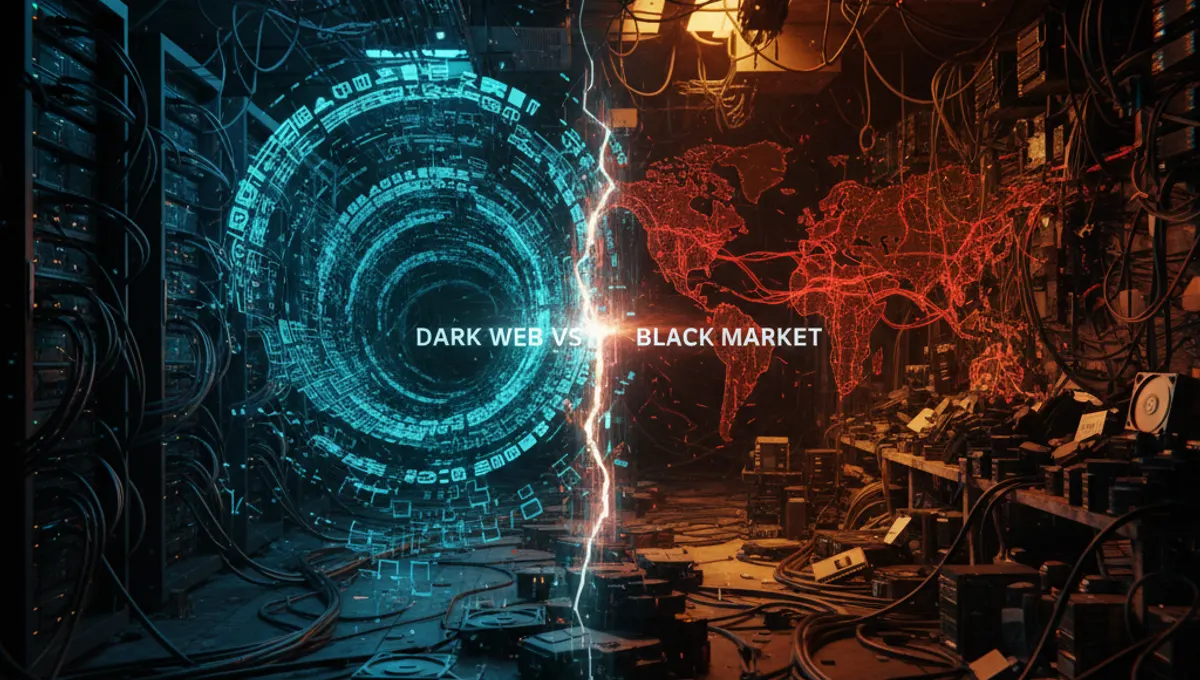
Dark Web vs Black Market: Content vs Infrastructure
A black market is an illegal marketplace where prohibited goods or services are traded. Black markets can exist on the surface web, deep web, or dark web. The dark web provides anonymity that makes black markets harder to shut down, but the dark web itself is not a black market. Many dark web sites are legal and legitimate. Conversely, black markets exist on the regular internet too—they're just easier to trace. Conflating dark web with black market is a common mistake. The dark web is infrastructure; a black market is an activity. You can use the dark web for journalism, activism, or privacy without engaging in illegal commerce. The anonymity features that protect whistleblowers also protect criminals, which is why dark nets remain controversial.
Accessing Dark Nets Safely: VPN and Tor Setup
If you decide to access a dark net, use Tor Browser—the official client from the Tor Project. Before connecting to Tor, consider running a VPN first. This hides your ISP-visible connection to the Tor network from your internet service provider. Steps: install a reputable VPN, connect to it, then launch Tor Browser. Do not maximize your browser window—fingerprinting attacks can identify you based on screen resolution. Disable JavaScript in Tor Browser settings. Do not open multiple tabs to different sites simultaneously; this can leak your identity across sites. Do not enable plugins or extensions. Do not use your regular username or email on dark web sites. Each session should assume zero trust. If you're using Tails or Whonix, these operating systems route all traffic through Tor by default, adding another layer of isolation.
Common Mistakes and Security Risks
Beginners often assume Tor alone provides complete anonymity—it doesn't. Your behavior online matters as much as your technical setup. Logging into accounts with identifying information defeats anonymity. Downloading files from untrusted sources can expose you to malware. Torrenting over Tor breaks anonymity because BitTorrent leaks your real IP. Visiting sites with plugins enabled can reveal your identity. Assuming all .onion sites are trustworthy is dangerous; scams and honeypots are common. Never assume a site is secure just because it's on the dark web. Use password managers like Bitwarden to maintain separate credentials. Keep your operating system and software updated. If you're accessing the dark web for legitimate reasons—research, journalism, activism—document your security practices and maintain operational security discipline.
Frequently asked questions
Is dark net the same as dark web?
No. Dark net is the network infrastructure (like Tor). Dark web is the content accessed through it. Think of dark net as the highway system and dark web as the buildings along it. You can use a dark net to access regular websites, and you can access dark web content through different dark nets.
Is accessing the dark web illegal?
Accessing the dark web itself is legal in most countries. Using it for illegal activities is not. Many people use Tor for legitimate reasons—privacy, security research, journalism, activism. Law enforcement monitors dark web activity, so assume nothing is truly anonymous if you're engaging in illegal conduct.
What's the difference between dark web and black market?
Dark web is infrastructure. Black market is an activity. Black markets can exist anywhere on the internet. The dark web provides anonymity that makes black markets harder to trace, but most dark web content is legal. Conflating the two is inaccurate and misleading.
Do I need a VPN before using Tor?
It's recommended but not required. A VPN hides your connection to Tor from your ISP. However, using both adds complexity and potential points of failure. If you use a VPN, choose one that doesn't log traffic. Never use a VPN that logs your activity—it defeats the purpose.
Can I be tracked on the dark web?
Tor provides strong anonymity, but it's not perfect. Behavioral mistakes, malware, or compromised endpoints can expose you. Law enforcement has successfully identified dark web users through traffic analysis, malware injection, and operational security failures. Assume you can be tracked if you make mistakes.